


HOYA BIT is a crypto currency exchange dedicated to lowering the barriers to Web3, focusing on compliance, security, and an exceptional user-friendly experience for beginners. In a market filled with complex financial data and jargon, HOYABIT aims to provide a seamless bridge for atypical cryptocurrency users, such as complete novices and senior citizens, to participate in digital asset investment without pain.The "JB AI Agent Project" aims to address the pain points of "information overload" and "lack of trust" in traditional trading interfaces. We launched the "JB AI Agent" project, which is not just a customer service chatbot, but an intelligent assistant with a 3D physical presence that can understand ambiguous meanings through generative AI LLM and actively guide users through complex transactions, such as dollar-cost averaging orders.
As the lead UX designer for this project, I am responsible for building this conversational AI experience from the ground up, bridging the gap between complex underlying logic and front-end user perception.
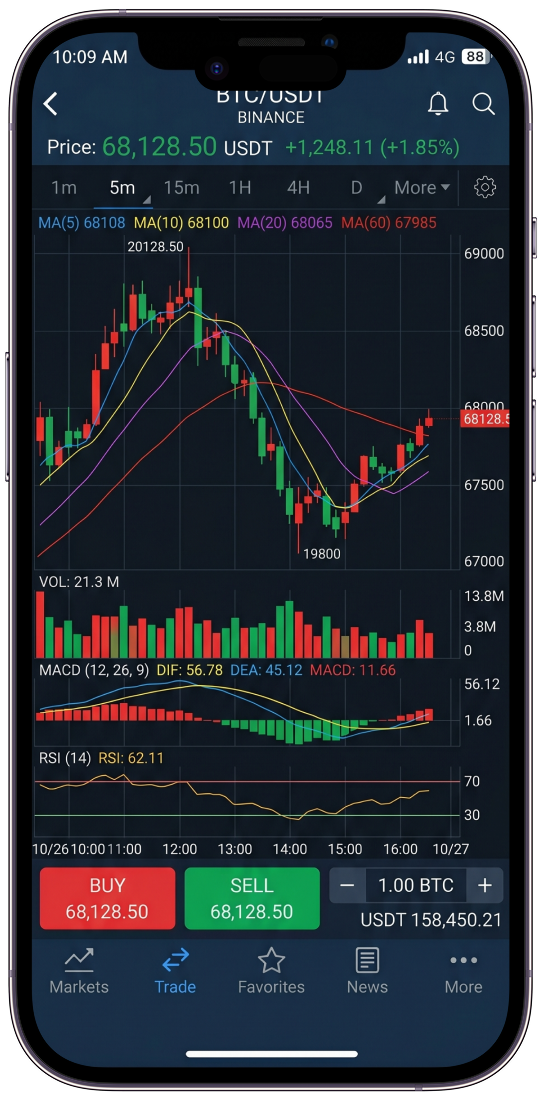
Why Existing Solutions Fail
We audited 6 competing crypto apps (Binance, MAX, BitoPro, OKX, Pionex, MaiCoin) and found a consistent pattern: every onboarding flow assumed users already understood order types, gas fees, and risk levels. For our target users — complete novices and seniors — this created an immediate wall of cognitive overload.A secondary audit of existing AI chatbot implementations revealed a deeper issue: rule-based bots could answer FAQs, but collapsed the moment users expressed ambiguous intent like "I want to save some money in Bitcoin." There was no system designed to bridge emotional intent and executable financial action.
・Unable to understand complex candlestick charts and jargon (Gas Fee, liquidation).
・Unsure how to take the first step (the deposit and order process is too lengthy).
・Lack of a sense of security in operations, deeply afraid of making costly mistakes.
Traditional "tutorial centers" or "guiding pop-ups" are ineffective due to a lack of interactivity. We need a proactive, human-like, and warm interface, essentially a personified AI Agent.

When designing an AI agent for complete newcomers and elders who know nothing about cryptocurrency, I found that referencing traditional finance or exchange apps was ineffective, as they all carry the same "information anxiety." To break this pattern, I intentionally broadened the scope of competitive analysis and turned to study top AI and companion products from various fields:

Duolingo (Gamified Guidance):
Learn how to use a friendly mascot to transform the stressful registration and learning process into a painless gamified experience, thereby reducing the defenses of new users.

Virtual Companion AI (3D Anthropomorphic Emotion):
Drawing on the interactive patterns of 3D virtual characters, upgrade the cold system dialogues to emotionally valuable "digital companions," thereby establishing the crucial "trust" in financial scenarios.

GPT (Minimalist Conversational Interface VUI):
Referencing its extremely clean interface focused on natural language processing. This led me to decide to abandon complex hierarchical menus, allowing users to express their financial needs in the most conversational and intuitive way.
I structured the AI's interaction model into three foundational layers to ensure a coherent user journey, this three-layer model wasn't just a framework — it directly shaped every design decision in the project:
・Top (Emotional - Emotional Connection):
Give the IP a soul, reducing the coldness of finance.
・Middle (Usability - Usability):
Transform complex "regular investment" or "market trading" into natural language conversations and Quick Action Buttons.
・Base (Trust - Trust):
Transparency of data sources, disclaimers, and clear boundaries of AI capabilities.
This three-layer model directly shaped every design decision in the project:
Emotional → Drove the decision to invest in a 3D character with a defined personality over a standard chat UI. JB's optimistic-yet-gentle persona was specified down to blink speed and tail movement to ensure emotional consistency across all system states.
Usability → Justified abandoning traditional menu hierarchies entirely. All complex actions — DCA setup, KYC, market queries — were redesigned as natural language inputs with Rich UI confirmation cards, reducing a 10-step order flow to 2 taps.
Trust → Mandated the edge case work. Every LLM failure, API timeout, and memory limitation was treated as a trust-critical moment, not a technical afterthought. In financial products, a single unhandled error can permanently destroy user confidence.

Building trust through a 3D character requires more than a good-looking model. Without a precise behavioral spec, animators default to generic motion — and generic motion breaks character consistency, which breaks trust.I authored a comprehensive AI Motion Guidelines Document that defined every system state as a UX contract between the character and the user:

Beyond state logic, I defined animation personality rules — what JB should always do (bouncy arcs, slow blinks, slight forward lean) and never do (rapid fidgeting, sharp pointing gestures, exaggerated cartoon expressions) — ensuring the character felt warm and professional regardless of what the AI was saying.
👉 Click here to see the SPEC

Key Design Trade-offsConversational-only vs. Hybrid Interface
Early explorations went fully conversational — no buttons, pure natural language. We rejected this after recognizing that for financial confirmations (order amounts, asset types), ambiguity is dangerous. The final design uses natural language for intent capture but switches to structured Rich UI Cards for confirmation and execution, ensuring clarity at the highest-stakes moments.
3D Character vs. 2D Avatar
A 2D avatar would have been significantly faster and cheaper to produce. We chose 3D specifically because our target users — seniors and novices — responded more trustingly to characters with physical presence and realistic micro-expressions. The added production cost was justified by the core product thesis: trust is the product.
Full LLM Freedom vs. Confidence Gating
Allowing the LLM to respond freely to any financial query created liability risk. We implemented a Confidence Gating layer — if the AI's intent recognition falls below a defined threshold, it defaults to a safe fallback rather than guessing. This intentionally limits the AI's capability in exchange for predictable, trustworthy behavior.
In an extremely fragile cryptocurrency trading environment, interface errors not only lead to a poor experience but also signify a collapse of trust and asset loss. While most AI projects focus solely on a smooth "Happy Path," I have invested significant effort in structuring system logic to handle the uncontrollability of large language models (LLMs) and network latency. My primary goal is to ensure that "AI JB" can provide a secure and protective experience under any extreme conditions.


Design loading contexts in JB to let users know the AI agent's actions instead of waiting idly.
Prototype
Fallback mechanism when the API disconnects or the AI cannot answer questions.
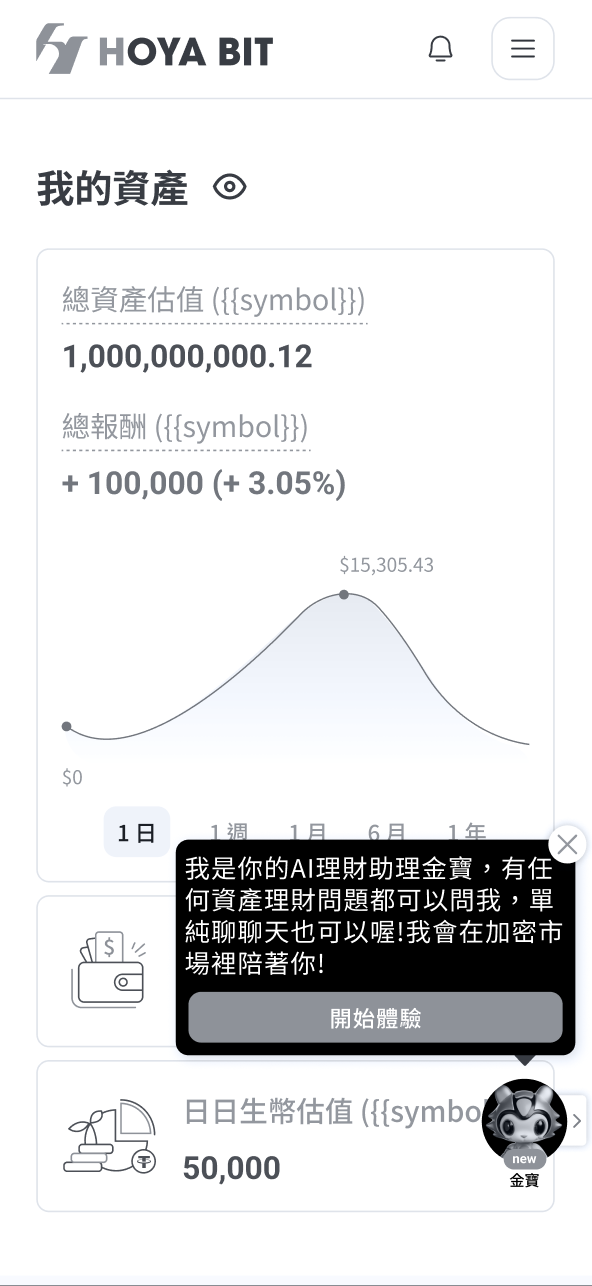
Add prompts at the entry point to guide users in experiencing the AI agent.
Prototype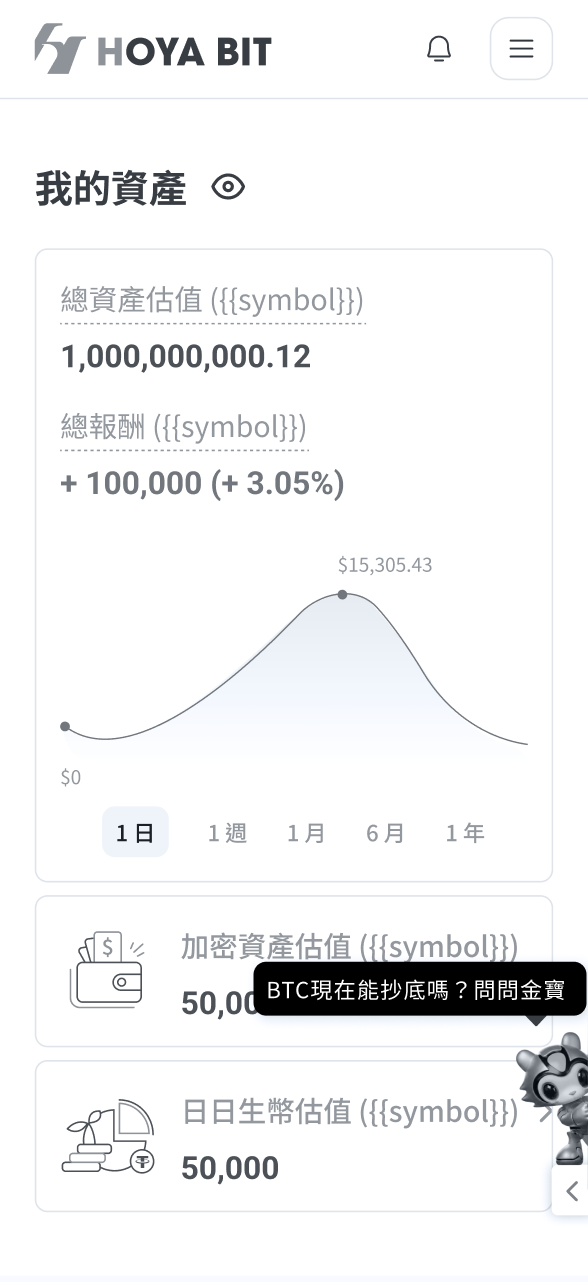
When minimizing the AI agent, prompts occasionally appear to remind users to ask questions to the AI.
Prototype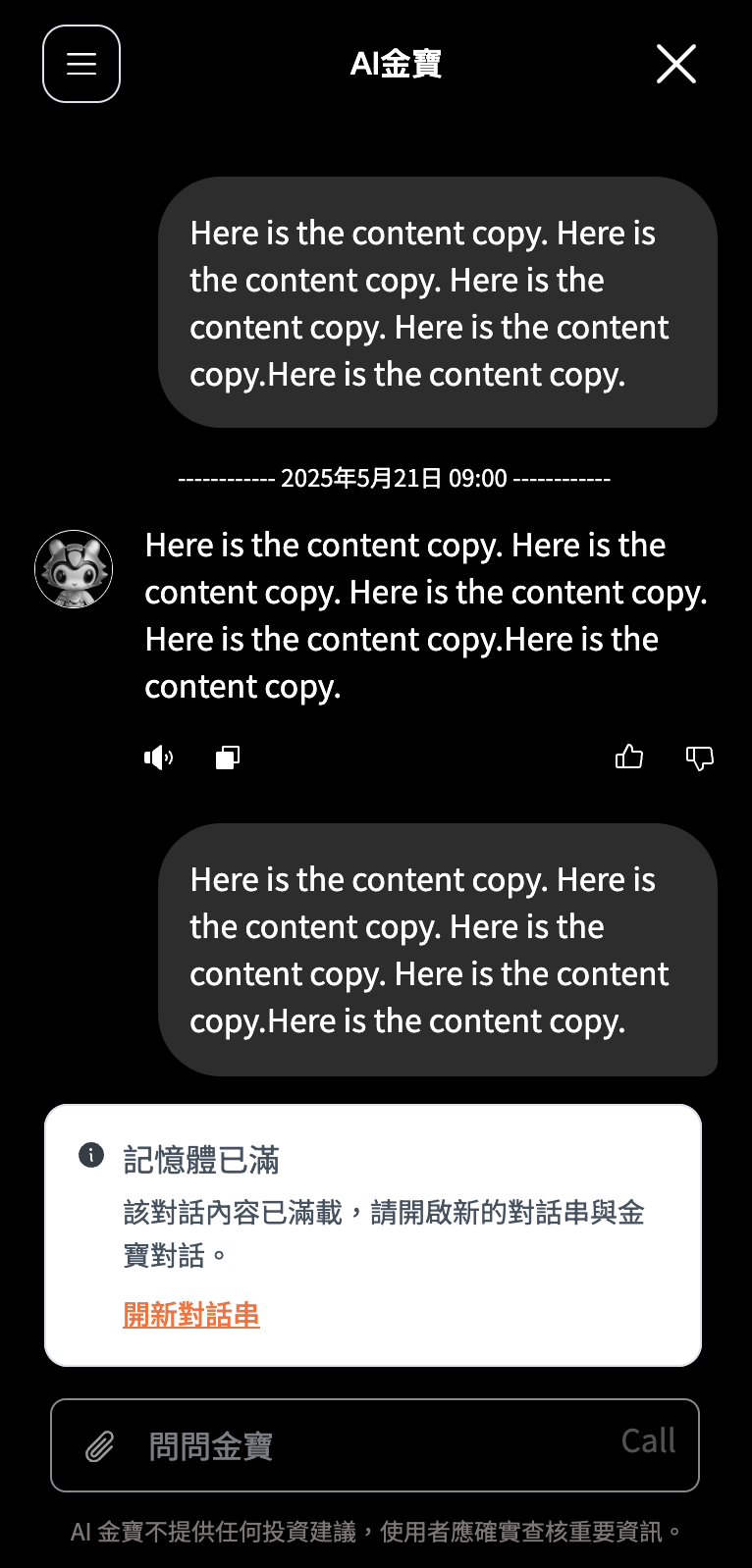
Handling when memory is full, prompting users to start a new conversation thread due to token limits.
PrototypeBusiness Impact:
This is a 0→1 project currently in active development. Quantitative metrics will be established post-launch, with the following hypotheses driving our design decisions:
・Conversion: Reducing first-trade flow from 10 steps to 2 is expected to directly lower drop-off at the deposit-to-order stage, which internal data identified as the highest abandonment point.
・Retention: The DCA "Smart Order" feature targets users who expressed savings intent but never converted — a segment representing a significant untapped revenue opportunity for the business.
・Trust Signal: Graceful fallback design for LLM errors and API timeouts was prioritized specifically because in financial products, a single unhandled error moment can permanently destroy user trust.
Impact & Reflections:
Navigating the Unpredictable: Trust in AI & Web3
Designing for a crypto AI assistant taught me that handling system failure gracefully is more critical than perfecting the "happy path." By establishing strict Confidence Gating and API Latency Fallbacks, we transformed potential LLM errors into empathetic, trust-building moments, ensuring users feel secure navigating high-stakes financial interactions.
Cross-Functional Leadership & 3D Art Direction
To bring "JB" to life, I expanded my role beyond standard product design to bridge the gap between 3D animators and front-end engineers. I established comprehensive 3D Motion Guidelines to eliminate development friction:
・Standardized Emotional States: Clearly defined the visual specs for "Breathing," "Listening," and "Thinking" to maintain a consistent persona.
・Micro-Interaction Rhythms: Referenced established mental models (e.g., the relaxed tempo of Wii Sports menus) to dictate precise animation speeds and delays.
・Streamlined DesignOps: Created a shared visual vocabulary that aligned product managers, designers, and developers, drastically reducing back-and-forth communication.
